Posts tonen met het label particulier archief. Alle posts tonen

vrijdag 16 augustus 2013

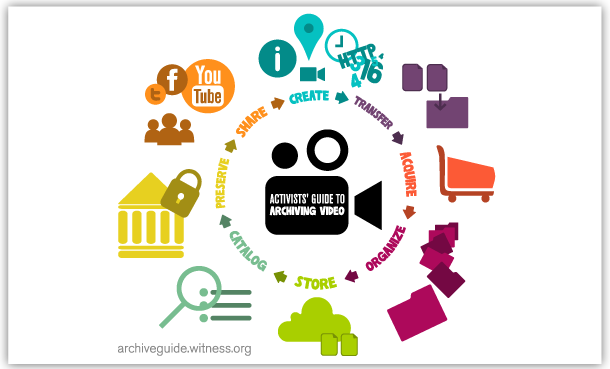
Activists guide to archiving video

Witness is een mensenrechten-organisatie die in 1992 is opgericht door good-old Peter Gabriel en zich vooral richt op het gebruik van videomateriaal bij het aan de kaak stellen van mensenrechtenschendingen. Directe aanleiding voor het oprichten van Witness waren de amateur-opnamen van de mishandeling van Rodney King.
Een van de doelen van de organisatie is ervoor zorgen dat mensen die misstanden filmen dat goed en veilig doen. Daarvoor hebben ze op hun indrukwekkende website allerlei en tips staan, variërend van handleidingen voor het blurren van gezichten tot het houden van interviews. Vorige maand hebben ze daar een gids voor het archiveren van digitale video's aan toegevoegd. De doelgroep is volgens eigen zeggen natuurlijk mensenrechtenactivisten en -organisaties, maar eerlijk gezegd is de inhoud voor iedereen, inclusief overheden, relevant.
Bij mij konden ze in ieder geval al niet meer stuk na de volgende beschrijving van wat archiveren wel en niet is:
Archiving is… a general term for the range of practices and decisions that support the long-term preservation, use, and accessibility of content with enduring value. In this Guide, our focus is on your digital videos.
Archiving is … an ongoing process that begins when a video is created and continues infinitely into the future.
Archiving is…a process that can be incorporated into your existing video work-flows
Archiving is … a way to ensure your videos remain authentic and intact, so you can use them as evidence.
Archiving is … a way to ensure your videos are available, findable and playable long into the future.
Archiving is NOT… a one-time action.
Archiving is NOT… putting your videos on a hard drive and leaving it on a shelf.
De gids is met 108 pagina's redelijk uitputtend en aan de orde komen onder andere metagegevens, bestandsformaten en opslagmedia.
Iedereen die digitale filmpjes maakt en die willen bewaren zou er op zijn minst even door heen moeten klikken. En als je bij een organisatie werkt die om wat voor reden dan ook videofilmpjes maakt en je bent verantwoordelijk voor het bewaren daarvan, dan zou ik de gids zeker lezen.

Gerelateerd

donderdag 27 juni 2013

Vergeet het!

Vorige week las ik over ForgetIt, dat ook onder dat programma valt.
While preservation of digital content is now well established in memory institutions such as national libraries and archives, it is still in its infancy in most other organizations, and even more so for personal content. ForgetIT combines three new concepts to ease the adoption of preservation in the personal and organizational context, each overcoming major obstacles:
  • First, Managed Forgetting models resource selection as a function of attention and significance dynamics. It is inspired by the important role of forgetting in human memory and focuses on characteristic signals of reduction in salience. For this purpose it relies on multi-faceted information assessment and offers customizable preservation options such as full  preservation, removing of redundancy, resource condensation, and also complete digital forgetting.
  • Secondly, Synergetic Preservation crosses the chasm that exists between active information use and preservation management by making intelligent preservation processes an integral part of the content lifecycle in information management and by developing solutions for smooth bi-directional transitions.
  • Thirdly, Contextualized Remembering targets keeping preserved content meaningful and useful. It will be based on a process of dynamic evolution-aware contextualization, which combines context extraction and packaging with evolution detection and intelligent re-contextualization.
[...]
The main expected outcomes are the flexible Preserve-or-Forget Framework for intelligent preservation management and, on top of it, two application pilots: one for personal preservation focussing on multimedia coverage of personal events and one for organizational preservation targeted at smooth preservation in organizational content management.
Dat is een hele mond vol, maar interessant genoeg om in de gaten te houden. Maar de naam van het project vind ik toch een beetje twijfelachtig.

Gerelateerd
BlogForever
Bewaar als... Een praktische leporello
Delete. Onthouden of vergeten in de digitale wereld.
Opslag wordt steeds goedkoper, dus laten we alles maar bewaren

En ook nog:
Digitaal duurzaam voor de gewone man
Digitale archivering bij de mensen thuis

Het plaatje komt van de ForgetIt-site

donderdag 6 juni 2013

donderdag 30 mei 2013

Het archief van de vrouw van de gouverneur

Jenny Sanford was tot begin 2010 getrouwd met Mark Sanford, de gouverneur van South Carolina. In 2009 scheidden ze van tafel en bed omdat hij met zijn vriendinnetje naar Argentinië was gevlogen en zes dagen onvindbaar was. Tot zover niets bijzonders, maar...
Een paar weken geleden bleek dat mevrouw Sanford haar hele persoonlijke archief heeft gedoneerd aan de bibliotheek van de College of Charleston.
In a recent interview, Jenny Sanford said she was moving last August and needed to downsize. “I was either going to donate them to someone who could use them, or throw them out. ”
She said she thought the materials would be especially useful to researchers interested in election campaigns. While married, she ran her husband's congressional and gubernatorial campaigns. They never lost an election.
Taken together, the materials provide a front-seat view of one of South Carolina's most dynamic political couples. Some materials are surprisingly personal and include a wedding album and emails the Sanfords sent each other in April 2009 about their unraveling marriage. They divorced later that year after Mark Sanford's public confession that he secretly left the state to visit his now-fiancee, Maria Belen Chapur, in Argentina.
The collection also contains thousands of letters, cards and emails that friends and strangers sent Jenny Sanford after the affair came to light. Many congratulated her for not standing by her husband during the news conference. Scores also wrote that they too had husbands and wives who were unfaithful. One suggested she move to Minnesota because of its good schools and wholesome values. During her book tour, a person handed her a voodoo doll with a note that said, “Don't get mad, get even.”
Nou vind ik het al apart dat het persoonlijke archief van "de vrouw van..." geacquireerd wordt, maar wat ik nog verbazingwekkender vind: het hele archief is volledig openbaar!
Some of the most revealing materials are notebooks of Jenny's from between 2004 and 2010, when her husband was governor. They're simple spiral notebooks that a college student might use, but inside are extensive notes that Jenny made about legislative battles and other issues.
On one page, she diagrammed a state of the state speech. On another she wrote about efforts to privatize Santee Cooper. “Santee Cooper — competitive process needed for study so no future questions arise re competitiveness of bid … Marshall wants to call number of banks and get proposals in writing.”
She scribbled notes to call Jon Lerner, a Washington, D.C., political consultant, and comments about some of her husband's bruising battles with the Legislature. In one, she apparently paraphrased a quote from powerful state Sen. Hugh Leatherman, R-Florence: “Leatherman — 'here b/f sanford, will remain after ms, ms will be footprints in the sand.' ”
Dat kunnen wij ons hier toch nauwelijks voorstellen.

Uit de inventaris blijkt trouwens dat er nog meer bijzondere dingen in het archief zitten, bijvoorbeeld een sieraard dat een cadeautje was van Fidel Castro en het voodoo-popje op de foto hierboven. In dit foto-album zie je nog meer foto's van delen van het archief.

Gerelateerd
De waarde van literaire archieven
Het e-depot van Beyoncé
Isn't our American democracy amazing

Plaatje: After Mark confessed to having an affair, a friend named Donnie sent a voodoo doll to Jenny. Jenny Sanford Collection, courtesy of College of Charleston Special Collections Department

vrijdag 12 april 2013

Wat gebeurt met jouw Google-account als je dood bent?

Gisteren presenteerde Google de Inactive Account Manager: 
Not many of us like thinking about death — especially our own. But making plans for what happens after you’re gone is really important for the people you leave behind. So today, we’re launching a new feature that makes it easy to tell Google what you want done with your digital assets when you die or can no longer use your account.
The feature is called Inactive Account Manager — not a great name, we know — and you’ll find it on your Google Account settings page. You can tell us what to do with your Gmail messages and data from several other Google services if your account becomes inactive for any reason.
Het werkt redelijk simpel:
  1. You specify a waiting period of inactivity for three, six, nine or twelve months.
  2. You specify your wishes in the form of contacts to notify, contacts to receive access to your data or a directive to delete your account data.
  3. One month before the waiting period is almost over, Google contacts you via email or text message.
  4. If you do not respond the waiting period expires and your wishes are carried out.
Google’s tool allows you specific control of what happens to the data for each of your Google products. You can specify up to ten contacts to receive a copy of your data once you’re gone and select the specific products they gain access to. For example, you might send your Gmail data to your wife, but choose to send your YouTube data to a business partner. Once notified, your contacts then have three months to download your data.
Je kunt zeggen van Google wat je wil, maar het bedrijf is wel de eerste grote speler die dit mogelijk maakt.
Al is het natuurlijk nog de vraag of het ook echt werkt als het zover is...

Gerelateerd
Digitale dingen na de dood
Wat gebeurt met je data als je dood bent?

dinsdag 19 februari 2013

De waarde van literaire archieven

Het plaatje hierboven is niet uit een literair archief, maar komt uit een van de 83 dozen met papieren van Woodward en Bernstein, die het Harry Ransom Center van de Universiteit van Texas 2003 voor 5 miljoen dollar van de heren gekocht heeft.
Het is een duivels dilemma, betalen voor archieven.
Ik schreef hier een hele tijd geleden over de mac van Rushdie, waar je bij de Emory University op kunt spelen. Hoewel ik dat nog altijd een geweldig idee vind, kijk ik nu toch wat gereserveerder naar de universiteit. In mijn naïviteit dacht ik dat Rushdie zijn archief belangeloos beschikbaar had gesteld. Niets is minder waar. De Wall Street Journal schreef een paar weken geleden over de waarde van literaire archieven:
"Authors would love for us to have their archives, but they want to sell," says Chantel Dunham, who raises money for the University of Georgia's libraries in Athens, Ga. "People ask for hundreds of thousands. We're a state institution. We can't pay anything like that."
Emory University, 65 miles away in Atlanta, can. In 2006, for an undisclosed amount, Salman Rushdie sold it 200 "falling apart, crappy cardboard boxes," as he said at the collection's opening in 2010. After Emory's archivists put his "mess" in order, Mr. Rushdie capitalized on their tidiness to research his own 2012 memoir.
Volgens de krant ligt de "schuld" voor deze kapitalisatie van archieven voor een deel bij Richard Nixon, die in 1969 de belastingaftrek voor "creatieve giften" afschafte. Sindsdien willen auteurs hun archieven niet meer gratis weggeven en zijn het dus vooral de grote, rijke, particuliere instituten die goede sier maken met de archieven.

In Nederland bestaat die belastingaftrek trouwens wel nog, zoals Eric Ketelaar tijdens de laatste algemene ledenvergadering van de KVAN benadrukte. Archiefdiensten zouden dus hier (meer) gebruik van kunnen maken bij de acquisitie van particuliere archieven. Het probleem is daarbij wel dat dit ook betekent dat een archief gekapitaliseerd moet worden. Iemand moet bepalen wat de waarde van de gift is. En eigenlijk willen we dat niet, want misschien wil die eigenaar het archief dan toch liever verkopen...
Moeilijk, moeilijk, moeilijk,

Gerelateerd

donderdag 14 februari 2013

"Normaliter zoek je nooit dingen op in je archief."

fun

Geknipt voor u, onderstreping door mij...
Maak om te beginnen onderscheid tussen je eigen administratie, werkdossiers en naslagmappen, waarin je informatie snel wilt kunnen opzoeken. Deze richt je thematisch in, of op een andere manier die je zelf handig vindt. Dit is niet je archief. Je stopt iets pas in het archief als je het niet meer in je onderneming gebruikt. Het archief is alleen bedoeld om dingen weg te stoppen voor een eventuele belastingcontrole, een juridisch conflict of iets dergelijks. Normaliter zoek je nooit dingen op in je archief.
Je archief kun je het beste per kalenderjaar indelen.
  • Koop minimaal één goedkope kartonnen archiefdoos of -map per jaar bij de kantoorboekhandel. Schrijf het jaartal er in grote letters op.
  • Berg stukken die je niet meer gebruikt op in het archief van het jaar op het moment van opbergen, niet in het jaar waarop het stuk gedateerd is. Pas nadat het stuk zijn actualiteitswaarde heeft verloren begint namelijk de bewaartermijn te lopen.
  • Nadat een jaar helemaal is afgesloten kun je de archiefmap stevig dichtbinden en wegstoppen in een kast, kelder of zolder.
Je elektronische archief kun je op dezelfde manier inrichten. Maak speciale archiefmappen per kalenderjaar waarin je de relevante bestanden wegstopt. Om te voorkomen dat je die groeiende hoeveelheid materiaal steeds moet back-uppen, kun je na afsluiting van een jaar de betreffende archiefmap op cd branden en de cd in je fysieke archiefmap bewaren. Je weet dan dat je een back-up in je archief hebt en je kunt de afgesloten archiefmappen buiten je normale dagelijkse of wekelijkse back-up houden.
Overigens staat op die pagina van Lancelots ook wel wat zinnige dingen hoor.
Na een jaar of acht freelancen komt dan het moment waarop je een oude jaardoos kunt weggooien. Bijvoorbeeld: op 1 januari 2008 kun je de archiefdoos van 2000 weggooien (want er kunnen stukken in zitten die je op 31 december 2000 hebt gearchiveerd en de bewaarplicht van die stukken eindigt zeven jaar later op 31 december 2007).
Let op: er zijn dingen die je niet wilt weggooien, ook niet na zeven jaar. Freelancers in de creatieve hoek (fotografen, tekstschrijvers, webdesigners etc.) hebben bijvoorbeeld te maken met het auteursrecht, dat blijft gelden tot 70 jaar na de dood van de maker. Daarnaast zijn er rechtsvorderingen die verlopen na 20 of 30 jaar. Bewaar bijvoorbeeld teksten of foto's, contracten en licenties, relevante correspondentie, eigendomsbewijzen, akten, polissen e.d. in aparte ordners die je nooit weggooit. Op die manier kun je je archiefmappen na zeven jaar wel gewoon weggooien, zonder je zorgen te maken over stukken die erin zitten die je nog langer wilt bewaren.
Gerelateerd
Over de maatschappelijke relevantie van archieven
Niveaus van digitaal beheer

Plaatje: Fun van Grabadonut

woensdag 30 januari 2013

Nog een keer: Beschrijf je foto's!

Afgelopen vrijdag zat ik met iemand in het café die tegen me zei: 
"Mijn man was helemaal in zijn element. Hij heeft van Sinterklaas een negatievenscanner gekregen en zit al de hele middag foto's te scannen."
Mijn eerste reactie was: 
"Zeg tegen hem dat hij die foto's ook even beschrijft, want IMG00001.jpg kan van alles zijn."

Toevallig las ik zaterdagochtend de "top 5 tips" om foto's te bewaren van Sally Jacobs - The Practical Archivist:

1. You can’t keep it all. Really, you can’t.
Maak een selectie van wat je wil bewaren. Je achterkleinkinderen zitten echt niet te wachten op al die vakantiefoto's. Kies er een paar uit en gooi de rest weg!

2. If it’s worth keeping, it’s worth treating right.
Probeer de temperatuur en vochtigheid van de ruimte waar je je afgedrukte foto's bewaard, zo stabiel mogelijk te houden. Kelder, zolder of garage zijn daarom waarschijnlijk niet de ideale opslagplekken.

3. The shortest pencil is better than the longest memory.
Beschrijf, beschrijf, beschrijf wat je bewaart! 
Of, om in archivaris-termen te blijven: 
"It's the metadata, stupid!" 


4. Digital is more fragile than you think.
In the world of digital, there is no equivalent of shoving your photos in a shoebox and stashing them in a closet. No, sir. If you want to bring your digital photos with you into the future, you will have to migrate them to new storage devices every 3-5 years. You’ll also have to save them in the newest version of the software that turns the 1′s and 0′s into your vacation snapshots. Quick solution? Scan your prints and print your digitals. Print out any image that you can’t stand to lose. Upload it to your favorite photo processing store. Make lots of copies of your favorite digitals and spread them around.
5. Rescue your photos from the Chemical Sandwich of Doooom!
Haal je (oude) foto's zo snel mogelijk uit die ouderwetse foto-albums! 
Je weet wel, die albums van die dikke kartonnen vellen met een soort lijm, waar je foto's tegenaan plakte en waar je daarna zo'n "plastic" vel overheen moest doen. 

Gerelateerd

zaterdag 12 januari 2013

Het e-depot van Beyoncé

Anytime she wants to remind herself of all that work—or almost anything else that's ever happened in her life—all she has to do is walk down the hall. There, across from the narrow conference room in which you are interviewing her, is another long, narrow room that contains the official Beyoncé archive, a temperature-controlled digital-storage facility that contains virtually every existing photograph of her, starting with the very first frames taken of Destiny's Child, the '90s girl group she once fronted; every interview she's ever done; every video of every show she's ever performed; every diary entry she's ever recorded while looking into the unblinking eye of her laptop.
[...]
Beyoncé's inner sanctum also contains thousands of hours of private footage, compiled by a "visual director" Beyoncé employs who has shot practically her every waking moment, up to sixteen hours a day, since 2005.
[...]
This digital database, modeled loosely on NBC's library, is a work in progress—the labeling, date-stamping, and cross-referencing has been under way for two years, and it'll be several months before that process is complete. But already, blinking lights signal that the product that is Beyoncé is safe and sound and ready to be summoned— and monetized—at the push of a button.
And this room—she calls it her "crazy archive"—is a key part of that, she will explain, so, "you know, I can always say, 'I want that interview I did for GQ,' and we can find it." And indeed, she will be able to find it, because the room in which you are sitting is rigged with a camera and microphone that is capturing not just her every utterance but yours as well. These are the ground rules: Before you get to see Beyoncé, you must first agree to live forever in her archive, too.
Uit de GQ van februari 2013.
Ik vind het fascinerend, zo'n particulier e-depot.
Excursie, commissie Buitenland?

Gerelateerd
De iPhone van Kraantje

Plaatje: Home depot van Mroach

dinsdag 11 september 2012

Niveaus van digitaal beheer

De leden van de National Digital Stewardship Alliance, dat is de Amerikaanse oudere zus van onze NCDD, heeft de afgelopen maanden nagedacht over de niveaus van "digital preservation" die je zou kunnen onderscheiden. Ze hadden geconstateerd dat er allerlei informatie was over bijvoorbeeld personal digital archiving en dat ook de eisen voor een volwaardig digitaal depot ook wel bekend zijn.
However, the working group felt there was a lack of solid guidance on how an organization should prioritize its resource allocation between these two ends of the spectrum.
Daarom hebben ze nu een schema waarin de verschillende niveaus die je zou kunnen onderscheiden staan beschreven:

The overall idea with the document is that all the things in the first level are either necessary prerequisites for things in the second to fourth levels or are themselves the most pressing things to address. To some extent, the goal for this diagram is that you could use it to start getting your proverbial digital boxes off the floor, and then work your way up to level four where you are much more protected against risk of loss.
Het concept staat hier en je mag het becommentariëren.

Ik vind het idee hoe dan ook geweldig, omdat ik ook de indruk heb dat heel veel organisaties eigenlijk geen idee hebben hoe ze zouden moeten beginnen.

Gerelateerd
Bewaar als... Een praktische leporello
Zonder jurk niets om te doen opwaaien

Plaatje: Niveau Creme van Datreuffel

dinsdag 26 juni 2012

Wat gebeurt met je data als je dood bent?

Ha, een "Step By Step Expert Guide To Protect Yourself Online Before You Die" van Life Insurance Finder. Inhoudelijk staan er misschien wat rare dingen in, maar het is een goede aanleiding om er toch eens over na te denken.

Gerelateerd
Digitale dingen na de dood

donderdag 19 april 2012

Beschrijf je foto's


Since digital photography is instantaneous, we take and collect an enormous amount of photos. But as our personal collections grow, it becomes more and more difficult to find specific photos. If your digital photos are difficult for you to manage, how will your loved ones be able to make sense of them in the future? This video explains how you can add descriptions and tags to your digital photo files to make it easier to organize and search your collection.
Gerelateerd
Metadata in je plaatjes
Embedded metadata manifesto
Het verhaal van een fotoalbum

dinsdag 17 april 2012

De iPhone van Kraantje

Kijk nou eens goed naar deze cover door Kraantje Pappie van Love interuption van Jack White. Wat valt je dan op?

Precies! De rappers lezen hun teksten op hun telefoon...

Dus behalve de Mac van Rushdie zullen we misschien ook wel de iPhone van Kraantje Pappie moeten bewaren (of emuleren).
Dat is nog eens wat anders dan de dag- foto- en knipselboeken die het FelixArchief heeft van The Strangers.

Gerelateerd
Mac van Rushdie
Muziek in het archief - voorheen een archiefding #23ad

maandag 21 november 2011

Bewaar als... Een praktische leporello


Digitale duurzaamheid lijkt ingewikkelder dan het is. Natuurlijk is het lastig en moet je er ook wel wat moeite voor doen. Maar zelf kunnen beslissen welke informatie, foto’s, filmpjes of projecten je over een aantal jaren nog tot je beschikking hebt, is toch ook wat waard. Er zijn een paar eenvoudige stappen waar je mee kunt beginnen. De inspanning hoeft niet groter te zijn dan het resultaat dat je wilt te behalen; over een jaar of twintig nog beschikken over een digitale geheugen
De volgende maatregelen neem je direct:
  1. Kies goede bestandsnamen
  2. Kies goede bestandsformaten
  3. Kies een goed passende strategie
  4. Orden en selecteer
Tot slot plan je jaarlijks onderhoud in.
Lees meer op Bewaar als... een handleiding digitaal archiveren voor ontwerpers van Premsela.org en de BNO, gemaakt door Karen van der Heiden. Eerder maakten zij ook al de "Beknopte handleiding archiveren voor ontwerpers."

Gerelateerd
Archiveren voor ontwerpers
Zonder jurk niets om te doen opwaaien

donderdag 29 september 2011

De waarde van archieven

Benen : Mannen meten de benen van de danseres Thelma de Llorez en maken notities…
Benen : Mannen meten de benen van de danseres Thelma de Llorez en maken notities en fotograferen haar. Deze dame wilde pas optreden in Parijs na afsluiting van een verzekering van een half miljoen franc. Frankrijk, 1931
Een paar dagen geleden vroeg Bernadine op Twitter naar de mogelijkheden om een unieke collectie kranten te verzekeren. Ik reageerde daarop door te zeggen dat het eigenlijk onmogelijk is om de vervangingswaarde van een unieke collectie te berekenen, aangezien vervangen onmogelijk is als de unieke documenten onherstelbaar beschadigd of zelfs totaal vernietigd worden. Voor mijn gevoel kun je dit vergelijken met "delen door nul."

Terzijde 
Ik vind het nog altijd onbegrijpelijk dat het NA een jaar of twee geleden kosten noch moeite gespaard heeft om de originele Schagen-brief in New York te exposeren. Volgens mij had het geld dat hier aan besteed is (een enorme verzekeringspremie naar het schijnt, conservatoren die heen en weer vliegen, klimaatgecontroleerde kisten en wat niet allemaal) beter uitgegeven kunnen worden aan een identieke replica, wat ze in China blijkbaar Fu Zhipin noemen. Zeker als je weet dat het originele stuk in Amerika ook alleen maar in een vitrine te zien is geweest. 
En nu ik toch weer aan het zeuren ben over de rijksoverheid: het is toch ook godgeklaagd dat de website die toen speciaal voor de 400ste verjaardag van "ons" New York werd gemaakt niet meer bestaat. De URL www.ny400.nl is nu gewoon een mirror van de website van Buitenlandse Zaken!
Wat zullen we doen, eerst nog een Wob-verzoek indienen of direct maar een incident melden bij de Erfgoedinspectie? 

Digitale archieven
Een vergelijkbaar probleem met waardebepaling, zie je ook bij het digitale archivering. We hebben geen idee wat al die digitale bestanden die een organsiatie of privé-persoon maakt en ontvangt echt waard zijn en weten dus ook niet hoeveel we zouden willen of moeten uitgeven om ze duurzaam toegankelijk te maken. Daarom is het onderzoek dat McAfee recent gedaan heeft wel interessant en waar Security.nl over schrijft:
De gemiddelde Nederlander heeft op diverse digitale apparaten voor 15.000 euro aan digitale bezittingen, aldus onderzoek dat McAfee liet uitvoeren. [...]
27 procent van die bezittingen werd beschouwd als "onmogelijk om te herstellen" in geval van verlies en zonder goede back-up. Deze bezittingen hadden een gemiddelde waarde van €7.356. Respondenten voorspelden dat het gemiddeld 82 uur zou kosten om hun digitale bezittingen bij verlies te herstellen.
Interessant om te zien is de hiërarchie die mensen aanbrengen in hun bezittingen.
Respondents valued personal memories at an average of $18,919, compared to:
$6,956 for Personal Records
$3,798 for Career Information
$2,848 for Hobbies and Projects
$2,825 for Personal Communications
$2,092 for Entertainment Files
Er valt vast het nodige aan dit onderzoek af te dingen, maar wat er wel uit blijkt is dat mensen hun kop in het zand stoppen. Want hoewel ze dus zelf inschatten dat herstellen 82 uur kost en de waarde van de bezittingen bijna €14.000 zou zijn, blijkt bijna een kwart van de respondenten geen voorzorgsmaatregelen te hebben genomen.
Despite the high financial and emotional value of their assets stored in various places, 32 percent of the consumers who don’t use security protection on all of their devices still don’t think they need it. Respondents also cited cost as another reason why they are reluctant to purchase security protection for all of their gadgets (31 percent). However, 86 percent of people did agree that purchasing security protection was money well spent
Gerelateerd
Authenticiteit?
Tieners en digitale duurzaamheid

Afbeelding: de foto komt uit de fotocollectie van het NA

donderdag 18 augustus 2011

1000memories bewaart je foto's voor eeuwig


1000memories.com belooft je foto's voor altijd te bewaren:
We know that forever is a challenge to guarantee. That said, we take the trust you place in us very seriously and do everything we can to make sure that your photos, stories and memories will be here for future generations.
We have taken several extraordinary steps to ensure that your memories will never be deleted:
  • It is our policy to preserve your memories. On 1000memories, your account cannot expire, and we will never delete your photos, stories or memories (though you are free to do so yourself)
  • We use the world's best data centers and data center technologies to protect and store your data. The data centers are audited and accredited to the same standards that banks use to store and protect your data. In the event that one data center shuts down, we store multiple copies of all of the content on 1000memories to ensure that if something ever happens to one copy, we have backups ready to go 
  • We let you make unlimited copies of memory page content to store offline. We have an easy-to-use data export feature that lets you download your memory page at a click of a button, then save copies wherever you’d like. We wrote a bit more about it here 
  • We are taking steps to make 1000memories content a part of official history by partnering with digital library systems. For instance, the Egypt remembers page was recently added to the official Internet Archive Collection of the Library of Congress and Bibliotheque Nationale
This is only the beginning. It is our mission to provide a safe place for your memories so that they can be passed down to future generations. This is as close to a permanent space for your memories that you’ll ever find on the Internet. And it should be.

zondag 12 juni 2011

Tieners en digitale duurzaamheid

O wat vind ik dit soort programma's mooi...
Begin dit jaar schreef ik al over het K-12 Web Archiving-project van de Library of Congres en Archive-it. Maar NDIIP heeft meer jeugdprogramma's over duurzame toegankelijkheid.
Vorige maand bezocht een klas "8th graders" uit Florida de LoC en zij werden een uur lang onderhouden over het bewaren van hun digitale foto's:
There was a roughly even split between students who used digital cameras and those who used phones to take their pictures, with one student still using film (!). The split is important, because the primary distribution (and possibly only long-term storage) strategy for many of the phone users was to upload their photos to a social networking site such as Facebook.
We explained some of the issues with using a social network site as a primary storage option (history has shown that those sites don’t stick around forever), and talked about how it’s best to save your photos across a range of devices (thumb drives, CDs, external hard drives, online storage) and geographies (your house in Florida, your friend’s house across town, your grandma’s house in Seattle).
And we were pleasantly surprised by the students’ degree of knowledge on the issues. Most of them recognized that their digital photos were “at-risk” in some way (one had filled her camera by shooting 800 photos in one day and was worried about how to save them when she ran out of space), and many had perfectly reasonable back-up and replication strategies already in place. Our presentation “teased-out” more detail on these strategies, and got both the students and their parental chaperones to think a little harder about saving their photos with something that resembled a long-term strategy.
Bekijk ook even de presentatie (pdf) die ze gebruikt hebben.

Zeg, Robèrt, hoe en wanneer gaan we dit hier in den lande organiseren?

Gerelateerd
Websites archiveer je voor een zesbenig wezen

vrijdag 13 mei 2011

Digitale antiquiteiten


By 2036, data loss has become a thing of the past. All digital media is instantly uploaded to the internet and permanently stored in the cloud, safely backed-up on servers scattered around the world. Only a handful of small businesses in the world have the expertise to recover data from pre-cloud devices. On a hot summer day, a young man named Kai visits Digital Antiquities, a store in eastern Pennsylvania specializing in data recovery and sales of vintage electronics. He shows Cat, the store’s only employee, an old compact disc left to him from his deceased mother and asks her to recover its contents. Will Cat help him find a working CD reader? And what will they discover among the contents of the disc?
Mooi gemaakte film voor als je een kwartiertje over hebt, met heel mooie muziek en 'n beetje 'n tuttig eind. Zie meer op Futurestates.tv

Gerelateerd
Waarom digitale duurzaamheid belangrijk is voor jou

PS
Deze blog is een beetje op de valreep, aangezien Blogger sinds gisteren off line was. De blog van gisteren is nog offline, maar ik heb hoop dat hij nog gered wordt.

vrijdag 1 april 2011

Digitale dingen na de dood


Ze schrijven tegenwoordig over de raarste dingen boeken...
Via de Spellboundblog kwam ik terecht op de site Your digital afterlife die hoort bij het gelijknamige boek en het filmpje hierboven.
Written by the creators of TheDigitalBeyond.com, this book helps you secure your valuable digital assets for your loved ones and perhaps posterity. Whether you’re the casual email user or the hyper-connected digital dweller, you’ll come away with peace of mind knowing that your digital heirlooms won’t be lost in the shuffle.

Table of Contents
1. Introducing the Digital Afterlife
Your Digital Life, Death, and Beyond
2. The Shift to Digital
3. A Well-Lived (Digital) Life
4. The Artifacts of Your Life
5. The Value of Digital Things
6. What You Leave Behind
7. The Opportunity of Digital Legacy
8. Your Legacy at Risk
9. The Birth of an Industry
Securing Your Digital Legacy
10. Before You Begin
11. Computers and Devices
12. Email
13. Social Websites
14. Finance and Commerce
15. Create Your Plan
Epilogue: The Future of Digital Death
Het vierde hoofdstuk (the Artifacts of Your Life) is als 'teaser' gratis te downloaden. Hoewel ik vermoed dat het heel erg Amerikaans geörienteerd is, ziet het er toch veelbelovend uit. Hij staat dus op het verlanglijstje.

De blog op Spelboundblog verscheen naar aanleiding van een panel-sessie tijdens SXSW. De volledige sessie kun je hier beluisteren of hier bekijken. Hieronder zie je een grafische samenvatting die gemaakt is door Heather Willems.
You're Dead, Your Data Isn't: What Happens Now?
Een paar citaten uit de Spelboundblog:
Oklahoma recently passed a law that permits estate executors to access the online accounts of the recently deceased – the first and only state in the US to have such a law. It was pointed out during the session that in all other states, leaving your passwords to your loved ones is you asking them to impersonate you after your death.

(...)

When my family buys a new music CD, our family owns it – not the individual who happened to go to the store that day. It makes sense that an MP3 purchased by any member of my family would belong to our family. I want to be able to buy a Kindle for my family and know that my son can inherit my collection of e-books the same way he can inherit the books on my bookcase.

Gerelateerd
Monumentale accounts
Home is where the harddrive is

maandag 21 maart 2011

Personal Digital Archiving 2011

24 en 25 februari vond het congres Personal Digital Archiving 2011 plaats bij Archive.org. Daar zijn nu ook alle 46 (!) presentaties te bekijken.
Voor de rustige avonden en weekends, als er toch niets op tv is...

Zie voor meer links de pagina van Personal Digital Archiving

Plaatje: PDA sign van Rich Gibson